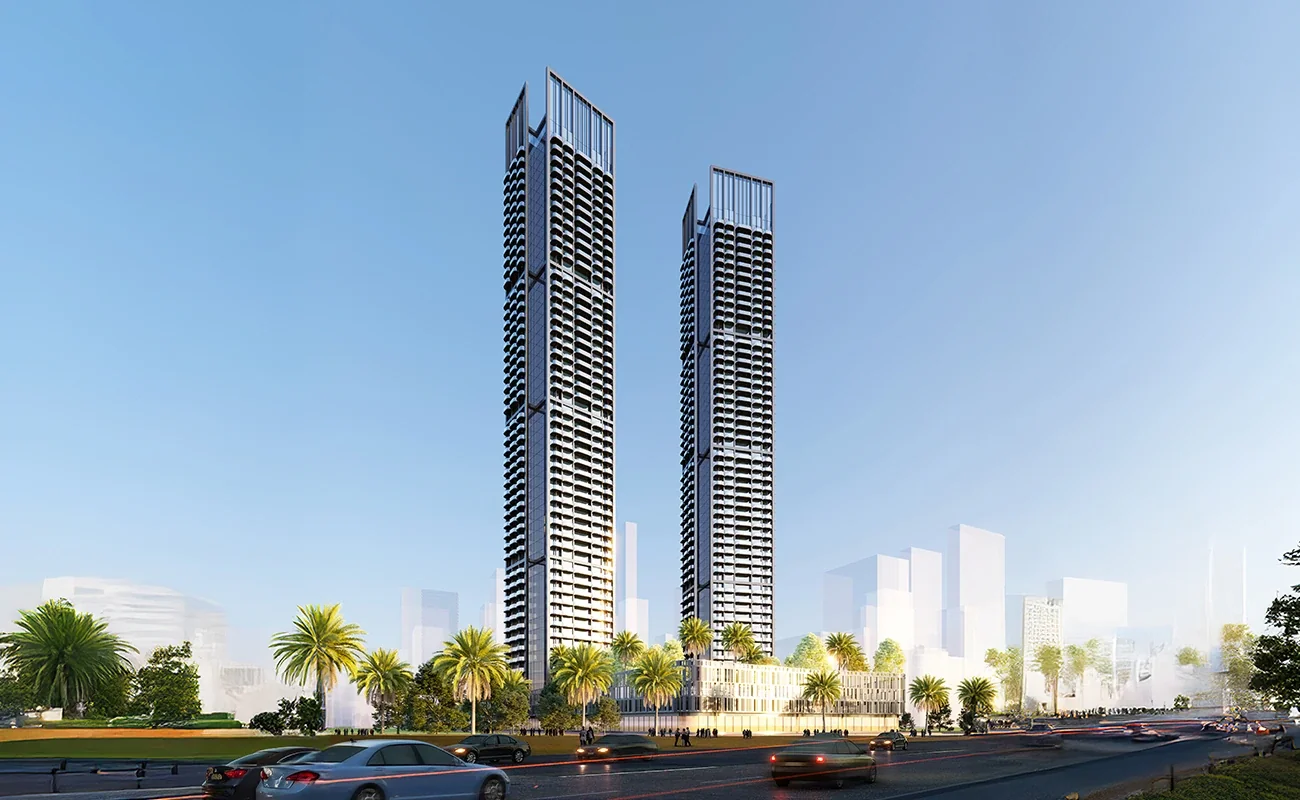
More live launches in Motor City
Rotate through nearby launches to compare entry price, delivery timing and project positioning in the same micro-market.
A seven-tower Sobha cluster in Motor City with stronger rental depth and a more rational long-hold profile than a pure image-driven launch.
Sobha Orbis is not the kind of off-plan asset to buy because it looks iconic on a brochure. It makes more sense as a large residential cluster in Motor City, backed by Sobha Realty, for buyers who value usability, rental depth and disciplined hold logic over pure address symbolism. Sobha’s official positioning is clear: seven towers with 1, 1.5 and 2-bedroom apartments, which immediately places the project in a broad, commercially readable segment rather than a niche trophy category.
What buyers are really acquiring here is not just a Sobha apartment. They are buying into a structured community in a district that is already understandable to the market, with a calmer and more rational profile than many launches that lean too heavily on branding or launch noise.
Orbis works because its logic is straightforward: a credible developer, an established district, efficient small and mid-size formats, and enough project scale to create genuine residential depth. That is a very different investment case from a skyline-driven purchase or a short-lived hype asset.
Within the Sobha pipeline, Sobha Solis reads as the more active, sport-lifestyle story. Sobha Orbis feels calmer and more conventional in the best sense. It speaks to buyers who want a sensible urban product, clear unit formats and real day-to-day demand.
Motor City is not Dubai’s most prestigious postcard address, but it is one of the easier residential districts to read. The area is known, lived-in and relatively simple for both tenants and buyers to understand. People come here less for symbolic centrality and more for workable daily life, road access, leisure anchors, retail convenience and a less chaotic residential feel than some newer districts.
For investors, that matters. Assets often defend occupancy better when the district already works as a real place to live rather than only as a future promise.
The official unit story remains clear: 1, 1.5 and 2-bedroom apartments. That is a useful mix because it covers several demand profiles without becoming too scattered. One-beds fit classic rental investment, 1.5-beds widen the appeal to occupiers and remote workers who genuinely need flexible extra space, and 2-beds support a more comfortable owner-occupier profile or a broader resale audience.
In a project like Orbis, that mix is a real advantage as long as pricing stays disciplined. It gives the scheme more exit depth than a project locked into a narrower unit story.
Sobha’s official community positioning highlights more than 40 resort-style amenities, together with a food and beverage street and a retail zone. That matters not because Dubai lacks amenities, but because coherence matters. A resort-style pool, landscaped gardens, clubhouse, jacuzzies, yoga areas, kids’ spaces and shared relaxation zones all make sense here because they reinforce the project’s actual identity: a usable urban cluster rather than a building with a token amenity list.
Residential assets tend to hold up better when the living experience feels complete and understandable to real occupiers.
The public structure most visibly shown right now is 20% on booking, 60% during construction and 20% on handover. For a balanced buyer, that is a fairly healthy plan: it avoids an artificially light upfront commitment while still leaving room to manage cash flow before completion. It suits organized investors better than highly speculative buyers looking for a very early flip.
As always, the exact version should be rechecked at reservation stage, since public sales surfaces can sometimes show more than one commercial option.
Sobha Orbis makes the most sense for buyers looking for a more rational Sobha entry point in an already established district, with a believable rental and hold thesis. It can also suit owner-occupiers who want an urban environment without moving into the densest and most expensive core-city districts.
It is less suited to ultra-prime patrimonial buyers, to anyone chasing a rarity asset, or to investors focused only on theoretical yield without caring about real unit quality.
Sobha Orbis becomes more convincing when it is read as a substance-led product rather than a façade-led one. Its value lies in the combination of the Sobha name, an already readable district, a well-calibrated unit mix and a residential proposition that makes practical sense. It is not the most theatrical project in the market, but for a disciplined investor that may be exactly why it can be a more durable and more understandable long-hold asset.
This page helps you assess the project quickly: area fit, delivery timing, payment logic and the main points to clarify before reserving.
Each milestone is shown with its share of the total. Where the developer uses monthly instalments, the label below keeps the monthly rhythm visible so the plan is easier to audit.
| Step | Allocation |
|---|---|
| Reservation / Booking | 20% |
| During construction | 60% |
| On handover | 20% |
Indicative only. Final payment milestones depend on developer documents and SPA terms.
Sobha Orbis is located in Motor City, developed by Sobha Realty.
For a deeper district breakdown, see the dedicated area guide. Read the Motor City area guide
Location should be assessed through access, end-user demand, day-to-day liveability and resale depth. Current public markers: pricing shown from 2 010 000 AED, handover guidance around Dec 2027, a payment plan of 20 / 60 / 20. It can also be benchmarked against 1 nearby project and 3 other projects from the same developer and 3 projects with similar payment-plan logic and 3 projects in a similar budget band and 3 projects with a similar handover horizon.
Sobha Orbis is your anchor point. Compare nearby live launches, see what else Sobha Realty has on market, then widen the benchmark by budget band, handover horizon and payment-plan logic before you enquire.
Rotate through nearby launches to compare entry price, delivery timing and project positioning in the same micro-market.
See how this opportunity sits inside the developer pipeline, with a different mix of areas, ticket sizes and handover timing.
Use this bucket when instalment rhythm matters as much as location: booking weight, construction cadence, handover balance and post-handover exposure.
Keep the ticket size stable while you compare area, developer and delivery trade-offs.
Useful when the timing of cashflow, completion and market entry matters more than the exact community match.
Keep one practical reference open for DLD fees, Oqood, developer selection, ROI framing or exit strategy.
Want the latest price list + availability for this project? Message us on WhatsApp or request details.